Marbling, not patching
Where a calico has hard-edged patches of orange and black with white in between, a tortoiseshell has the two colors interwoven in irregular marbled patterns. Sometimes called brindle. The face often splits asymmetrically — orange on one side, black on the other, or a diagonal across the nose. The portrait reads which mosaic your cat has and holds it. No standardization to an 'average' tortie.
Tortitude — folkloric, paintable
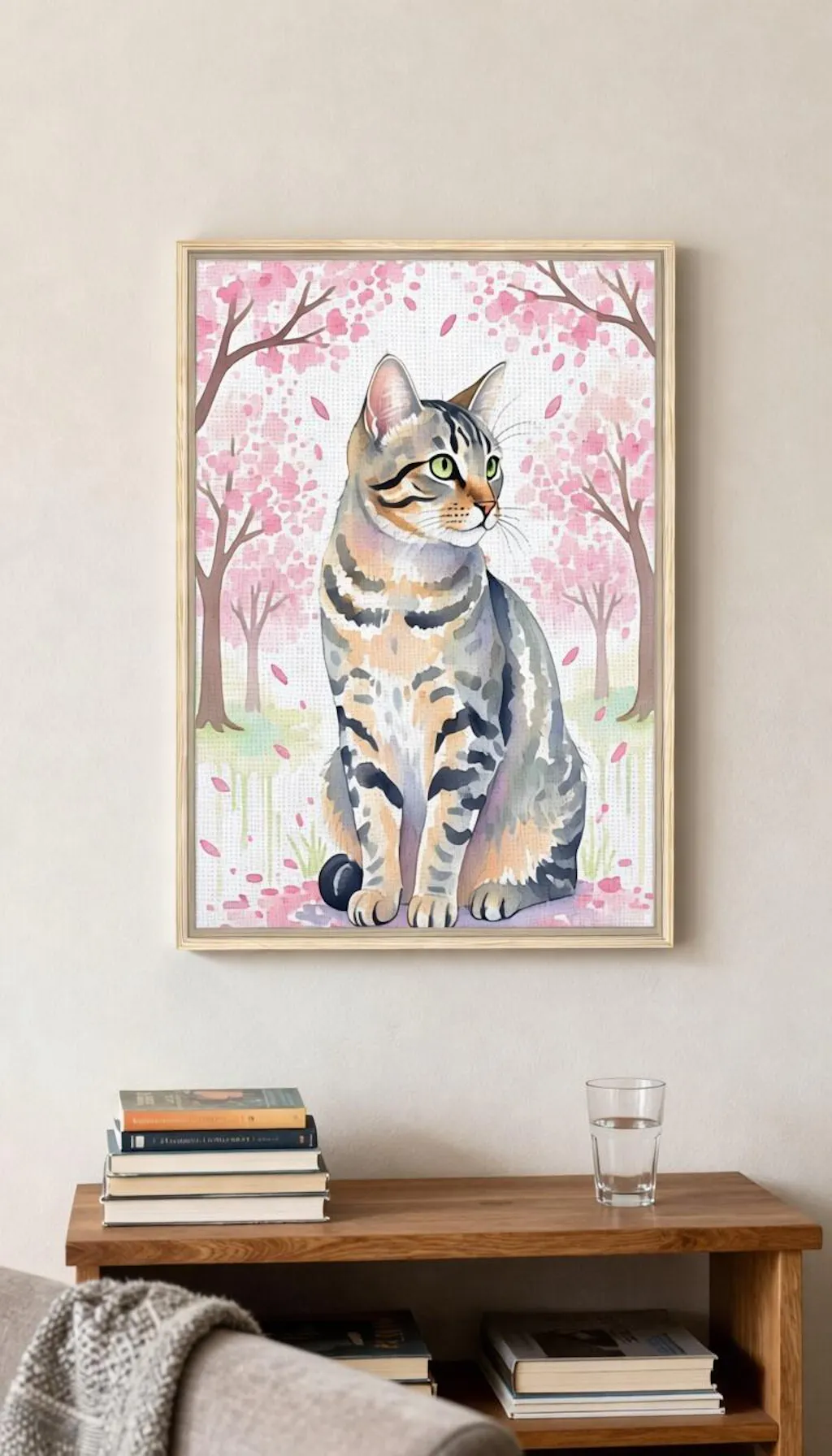
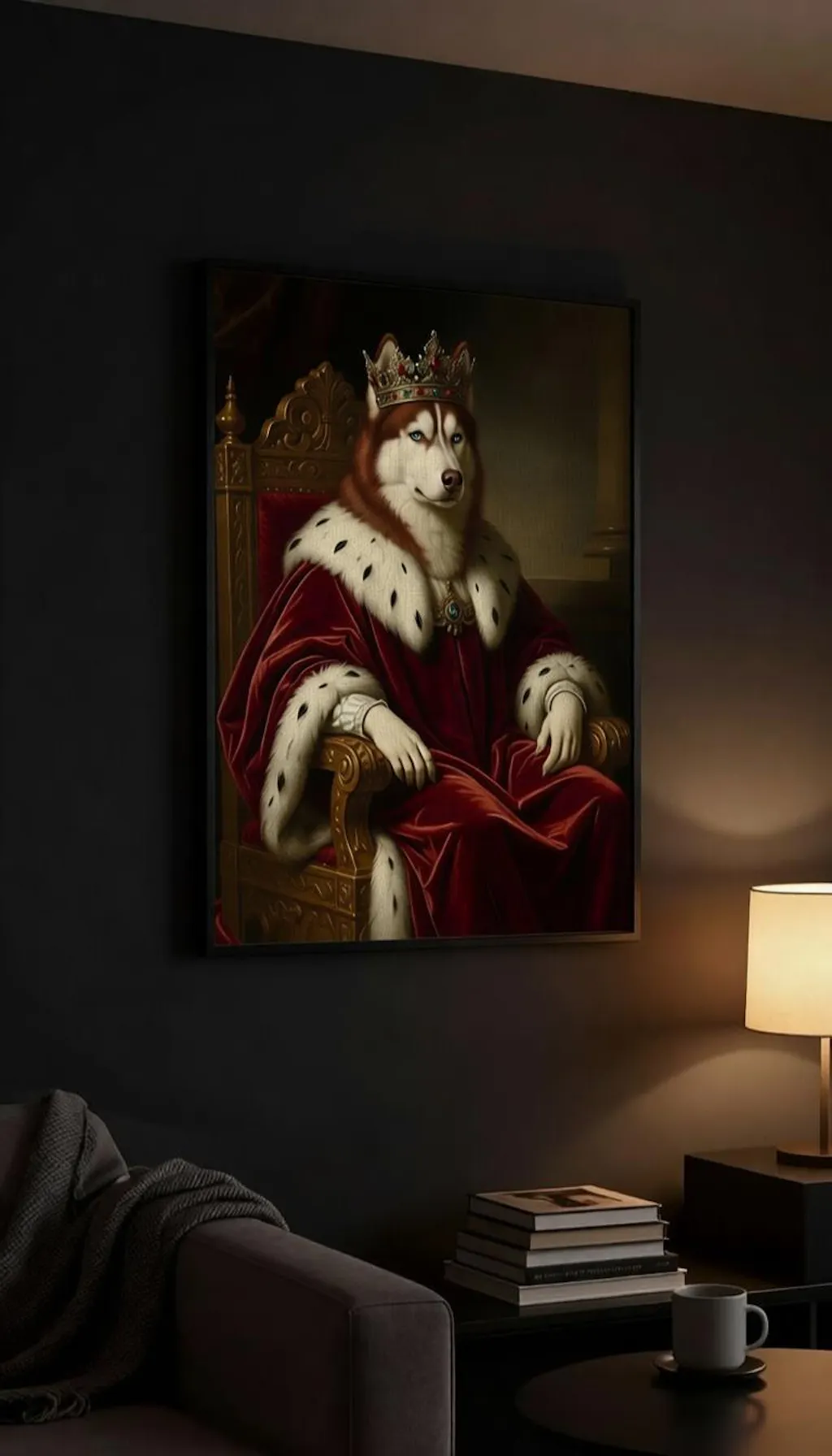
Torties have a reputation for sassy, opinionated temperament — the so-called 'tortitude.' It's folkloric, not scientific, but it shapes how owners want their torties painted. Knight gives a tortie the bearing the reputation suggests. Library frames her as the editorial subject she behaves like. Watercolor softens without losing the marble. Impressionist suits the natural blending.
Dilute torties
A dilute tortoiseshell (cream and blue-grey instead of orange and black) reads cooler and softer than a standard tortie. The portrait holds the dilute palette as itself rather than warming it. The marble pattern stays — just in a quieter register. Watercolor and Cherry Blossom palettes especially flatter dilute torties because the coat already sits in the soft tonal range.