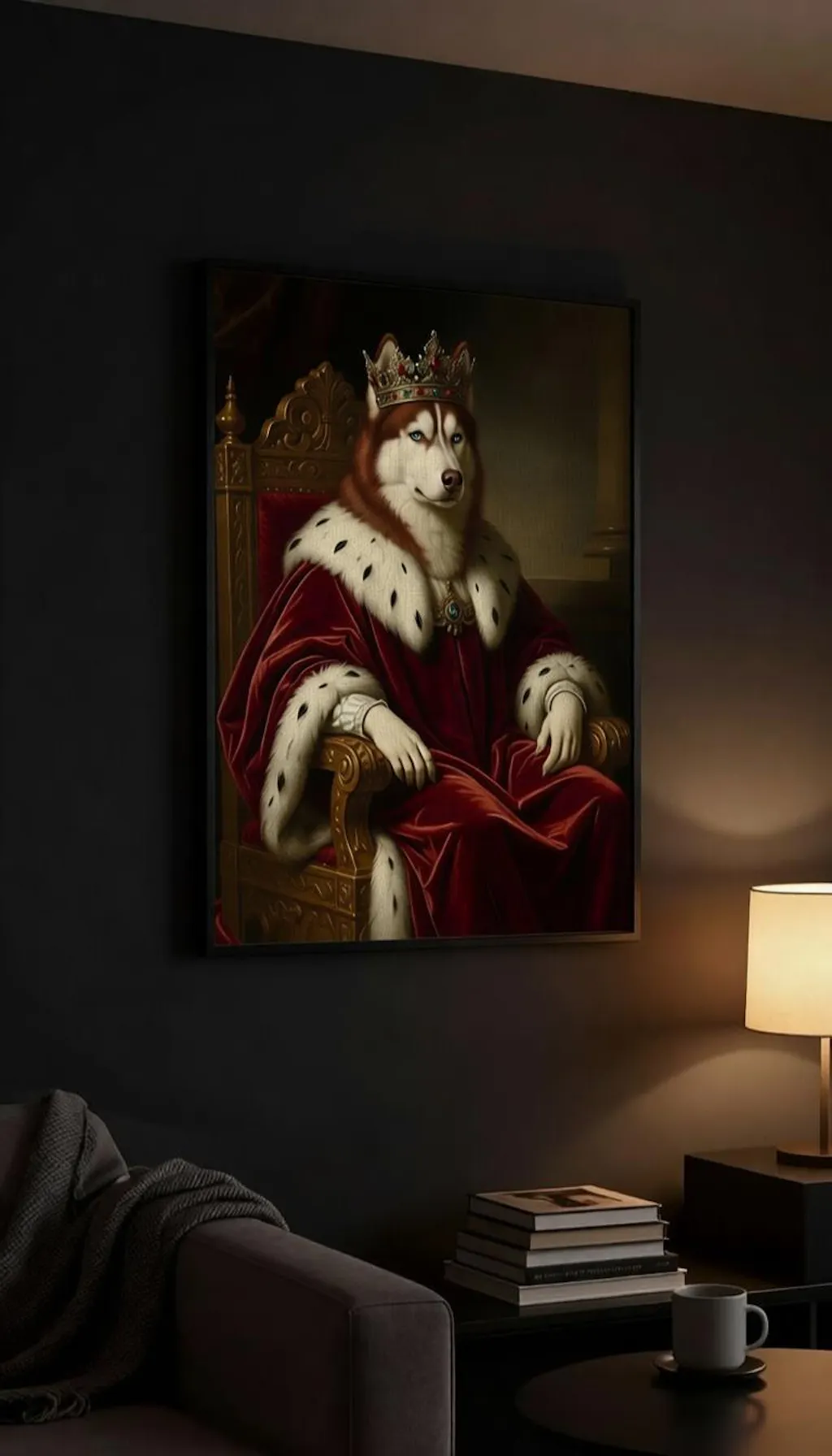
Why Tudor handles the drape
Tudor portraits were built to render formal garments — heavy fabric falling in directional folds. The Peruvian coat falls similarly, with a clear central seam and weight pulling the hair into composed drapes along the body. The style's vocabulary for cloth translates directly onto the cavy's coat. The result reads as the small formal subject the breed is.
Forward sweep over the face
A show Peruvian's hair grows forward over the face, often hiding the eyes entirely. Pet Peruvians vary — some owners trim a face window, others let it grow. We read which presentation your cavy actually has and paints it accordingly. If the eyes are hidden, the portrait honors that; if you've trimmed for visibility, the trim is preserved. The portrait doesn't normalize either way.
Watercolor for the long fall
Watercolor's directional wash technique is built for long-flowing subjects — it follows the coat's natural fall with brush direction rather than fighting it. Library suits a Peruvian in seated formal pose. Art Nouveau handles the curvilinear drape well too. Garden works if the cavy is presented cleanly; an untrimmed Peruvian in a wild setting can read as overgrown.