Why every calico is unique
The orange and black patches come from random X-chromosome inactivation in early embryonic cells. Each cell decides independently which X to silence, and her coat is the visible record. The white is a separate piecebald gene. Three colors, three independent processes, one cat. The portrait reads the patches from your photo as the genetic fingerprint they are.
Watercolor lets the patches breathe
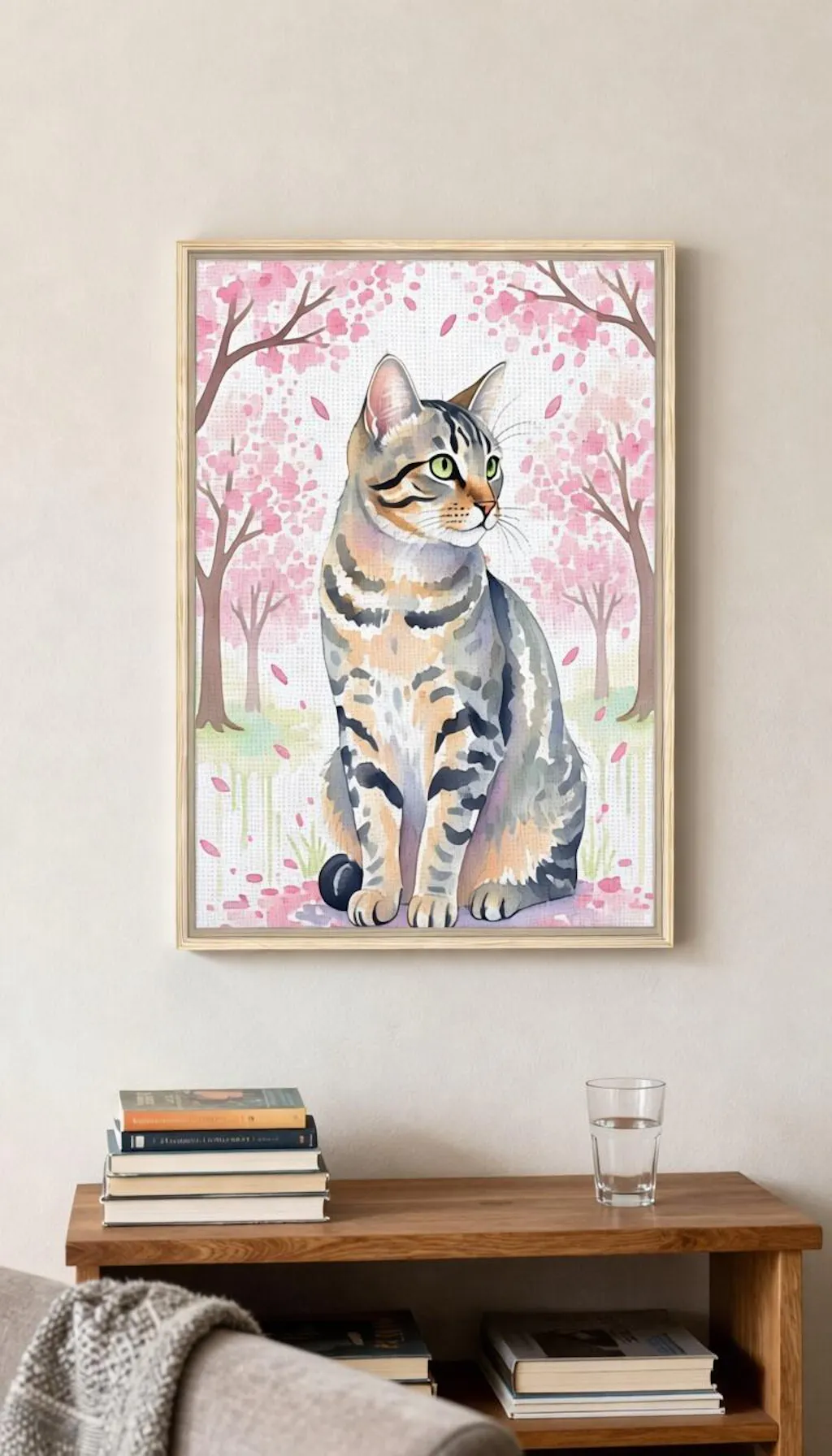
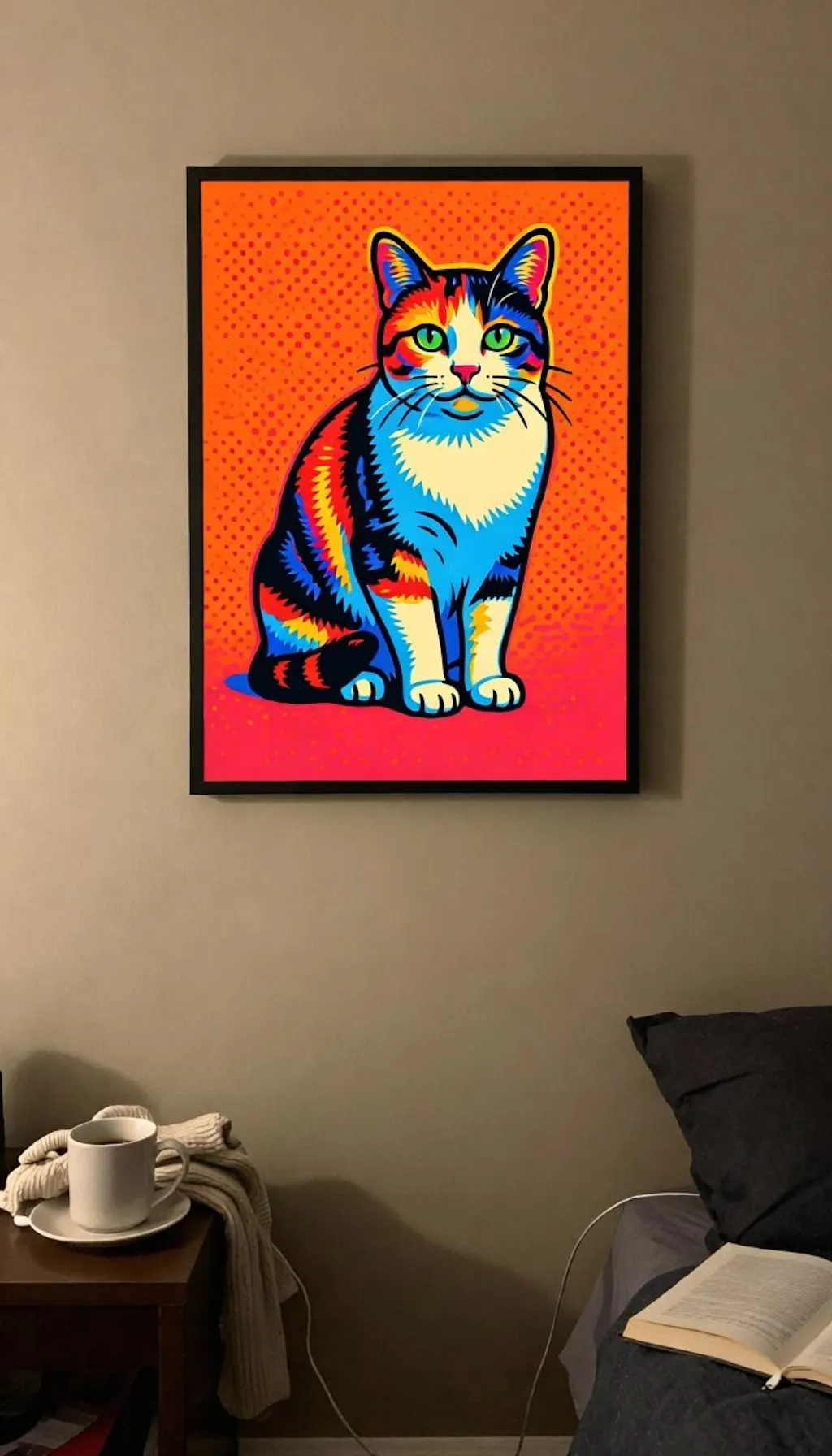
Calicos are busy. Three colors competing for attention need a style that gives each room. Watercolor lets each patch sit in its own wash without crowding. Pop Art does the opposite — treats each patch as a hard graphic block, turning the random mosaic into intentional composition. Library frames the whole cat in a setting that doesn't compete with the coat. Knight flatters the formal patches.
Patches vs blending
A calico has hard-edged patches; a tortoiseshell has blended marbling. Don't confuse them — the portrait reads which your cat actually is and renders accordingly. A dilute calico (cream and grey and white instead of orange and black and white) is read as a dilute and rendered with the softer palette intact, not warmed up to a standard calico.