The Siamese × The Impressionist portrait
Why a sleek coat needs textured paint
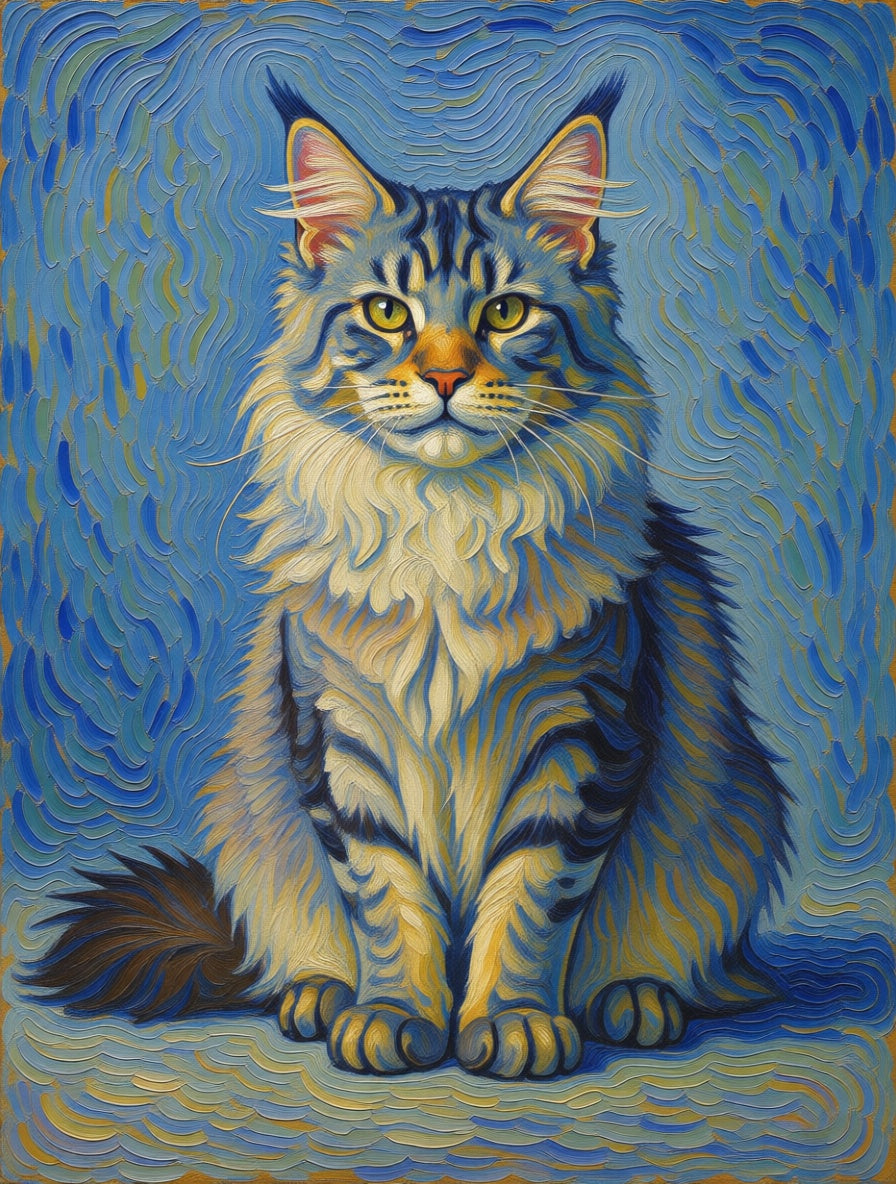
Most impressionist portraits add texture to the subject — long fur, fluffy coats, fabric folds — so the brushwork has somewhere to land. A Siamese's short reflective coat offers none of that, which is the combo's strength. The painting moves the heavy impasto into the background and leaves the cat as the smooth focal mass. Gestural ground against smooth subject is the composition.
The points become loaded brushloads
On a fluffy cat the points blend into surrounding fur. On a Siamese they sit on a smooth body as if the painter loaded one brush with dark paint and pressed down — once per point, with weight. The post-impressionist tradition treats that as a feature, painting the mask, ears, paws and tail as single thick strokes. The blue eyes become two bright marks of fresh paint.
Reads as a small museum study
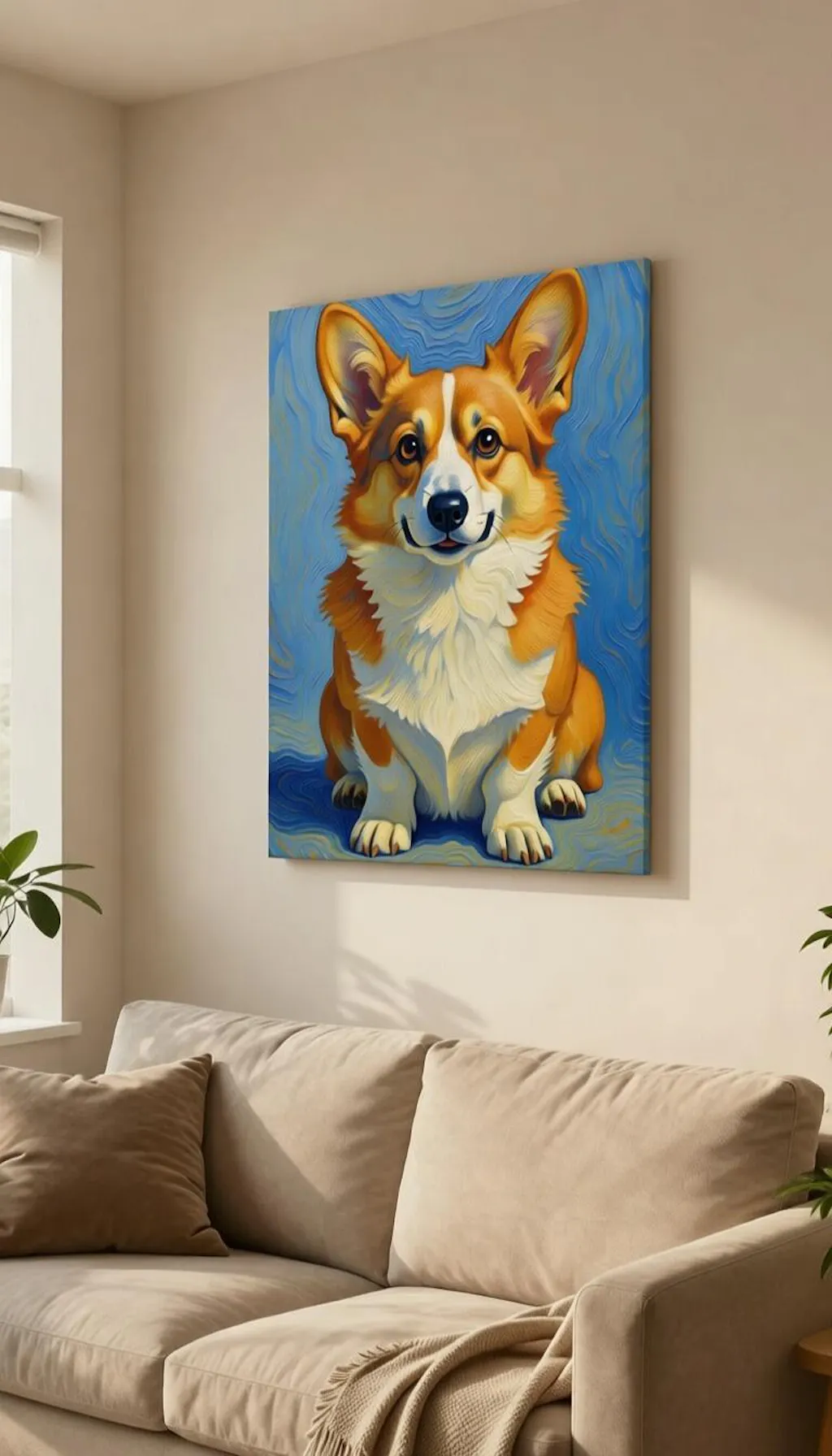
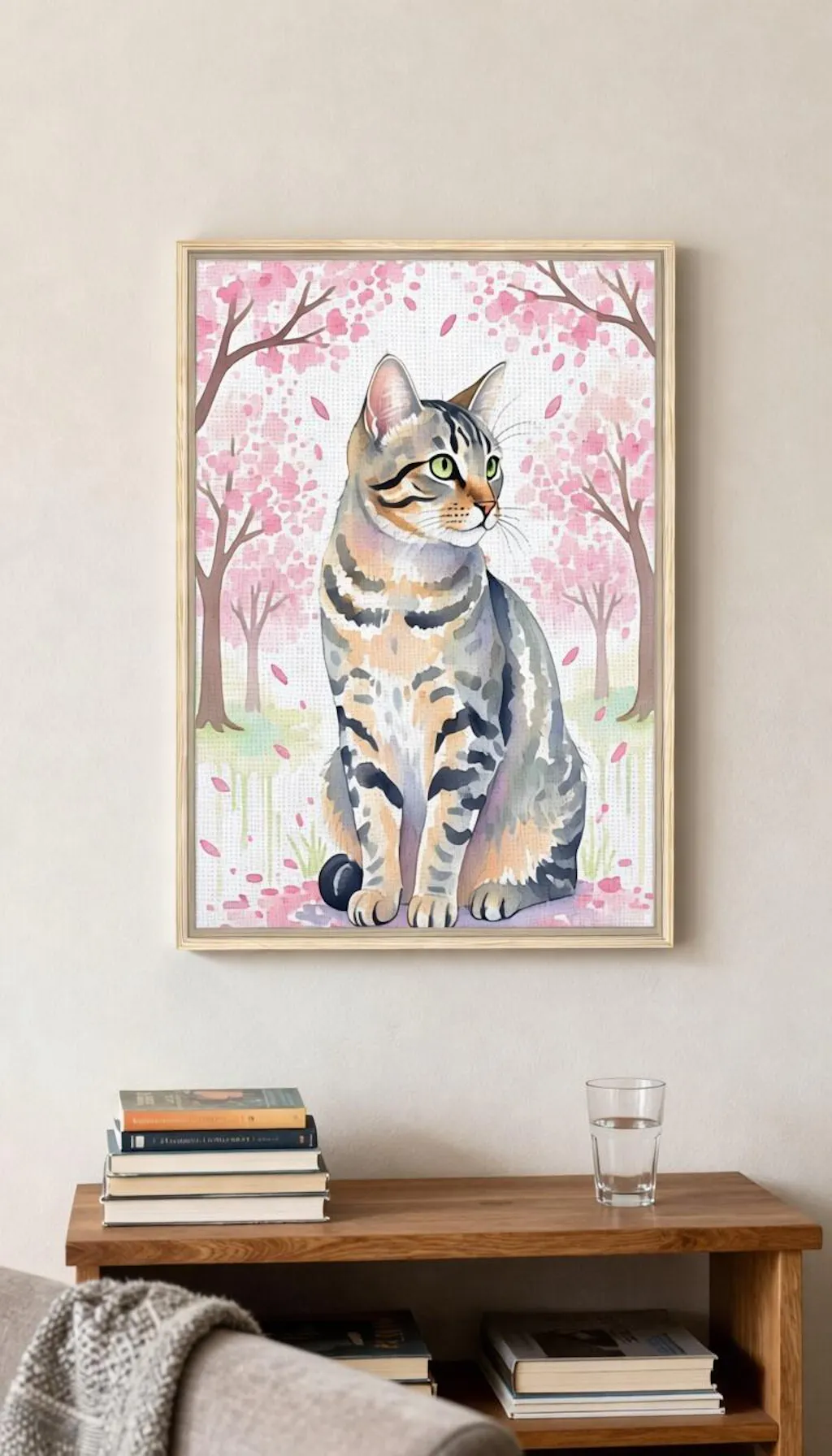
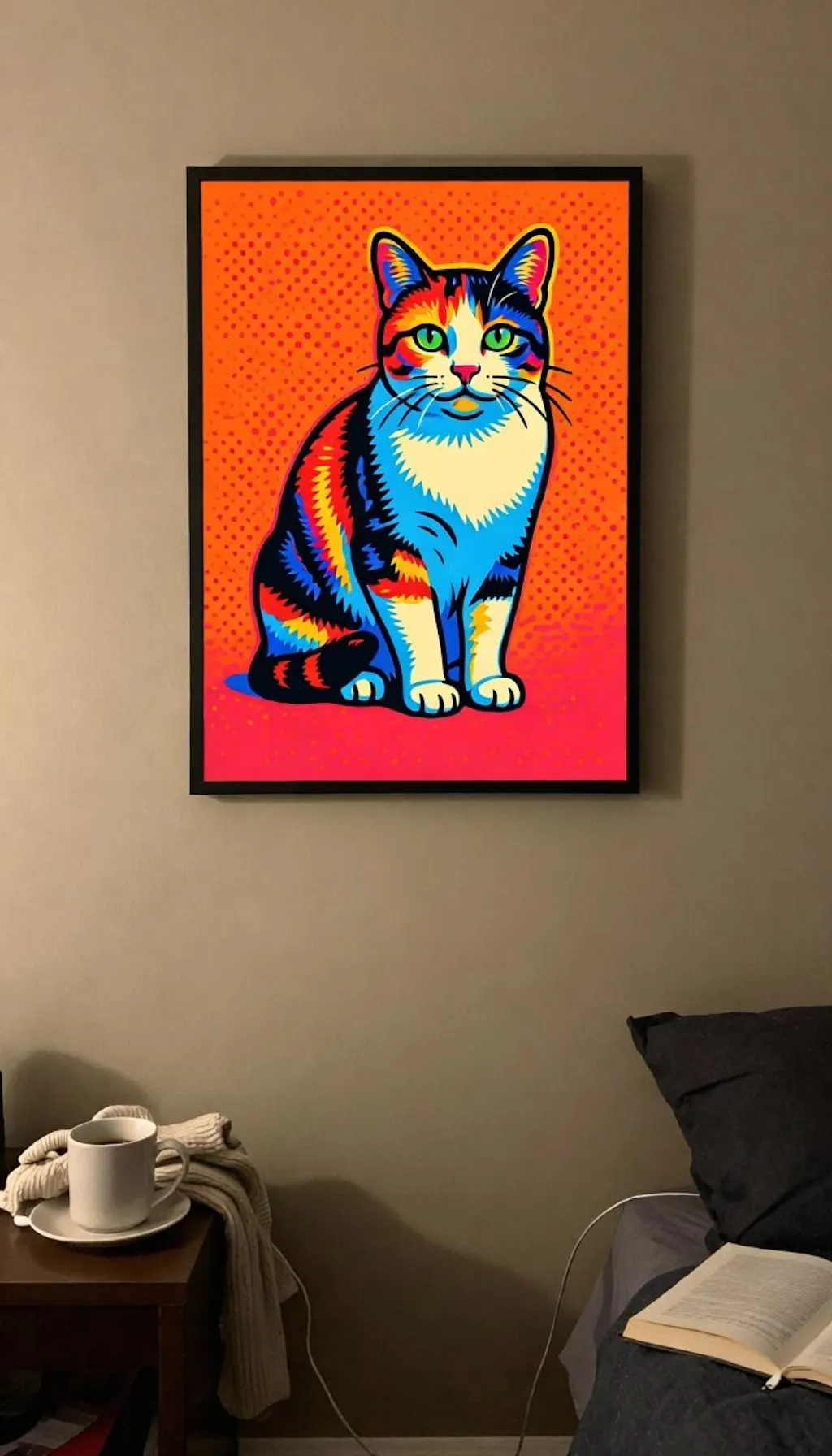
The combo lands strongest as a Framed Canvas in a slim wooden frame — the kind a small private gallery would hang. The woven canvas texture cooperates with the impasto in the background, and the smooth Siamese reads cleanly against it. A Wooden Framed Poster at medium size offers a more accessible version for smaller wall space; matte paper holds the brushwork well at print scale.