The Maine Coon × The Impressionist portrait
Why impasto and long fur belong together
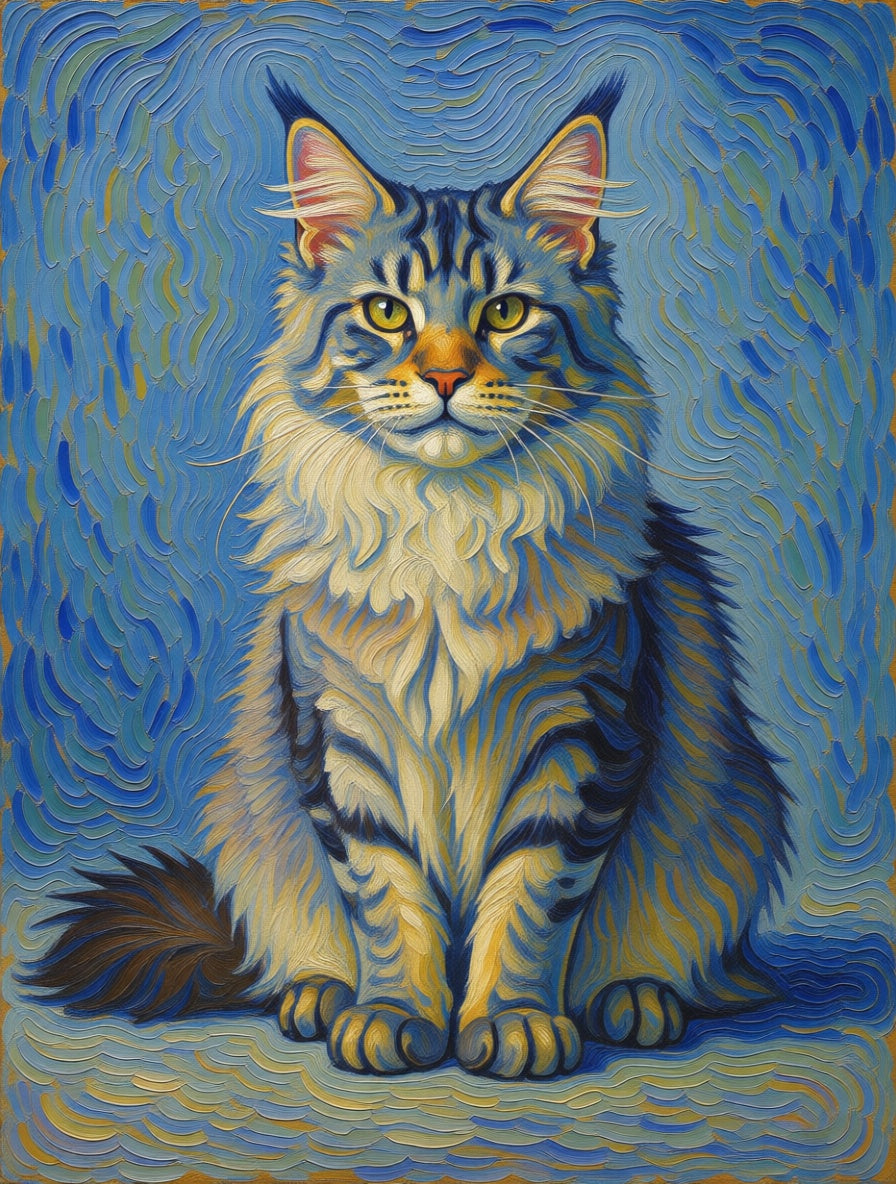
Post-impressionist painting treated brushwork as visible, directional, physical — every stroke a gesture. A Maine Coon's coat is the same idea in fur: layered, directional, catching light along strands. The portrait paints background and cat in the same palette-knife logic, so swirling impasto around the head reads as continuation of the ruff. Your Coon becomes the densest patch of brushwork.
Color choices for a Coon's coat
The palette adjusts to coat color. Brown tabbies get the warmer Van Gogh end — yellows, oranges, deep blues — that pull amber out of the fur. Silvers and blue Coons shift cooler, into Cézanne-style greens and purples. Torties and reds get the most vivid version, broken color in the background echoing broken color in the coat. Brushwork is built around your Coon, not pasted over.
Best as framed canvas, natural or warm wood
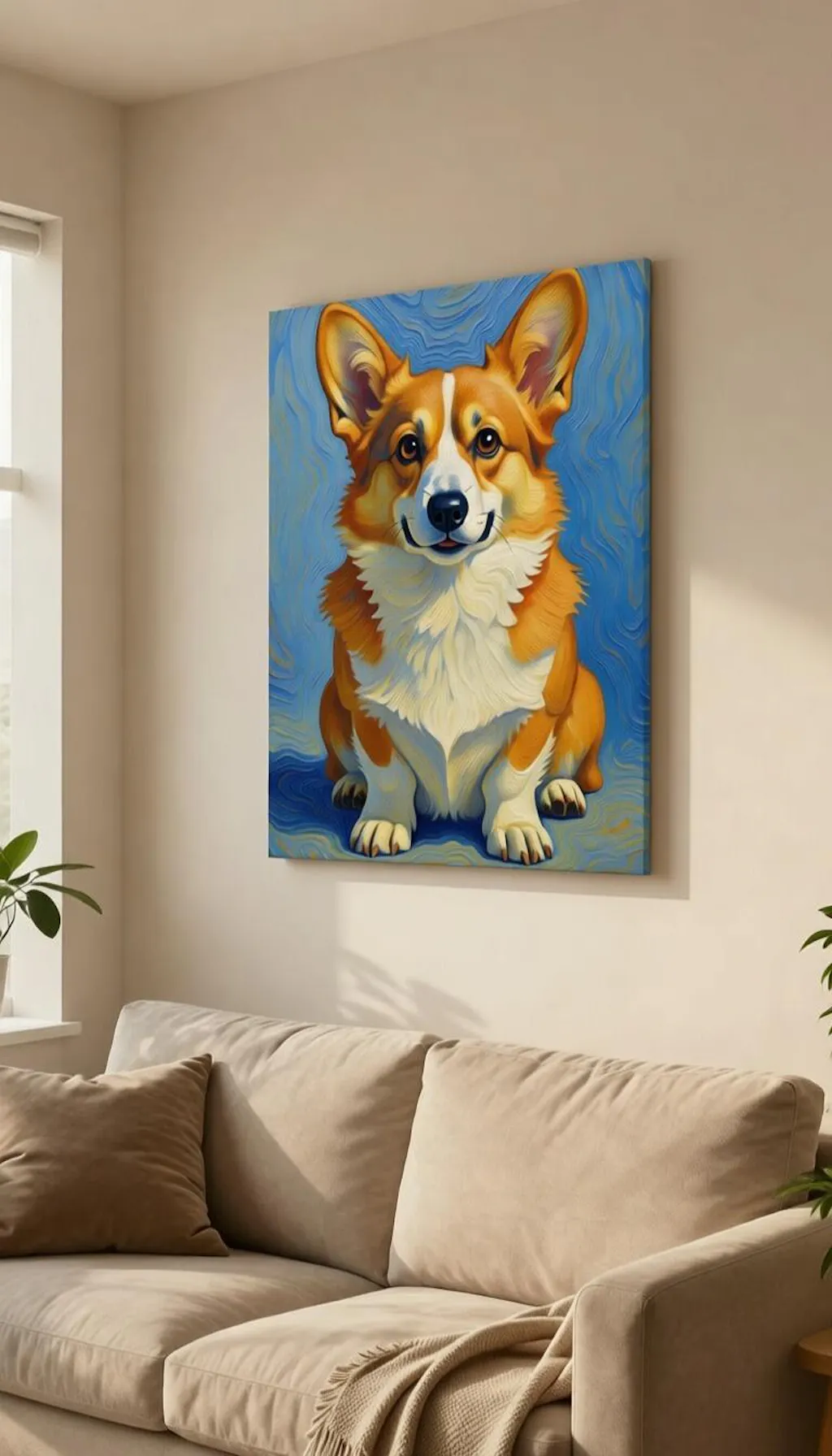
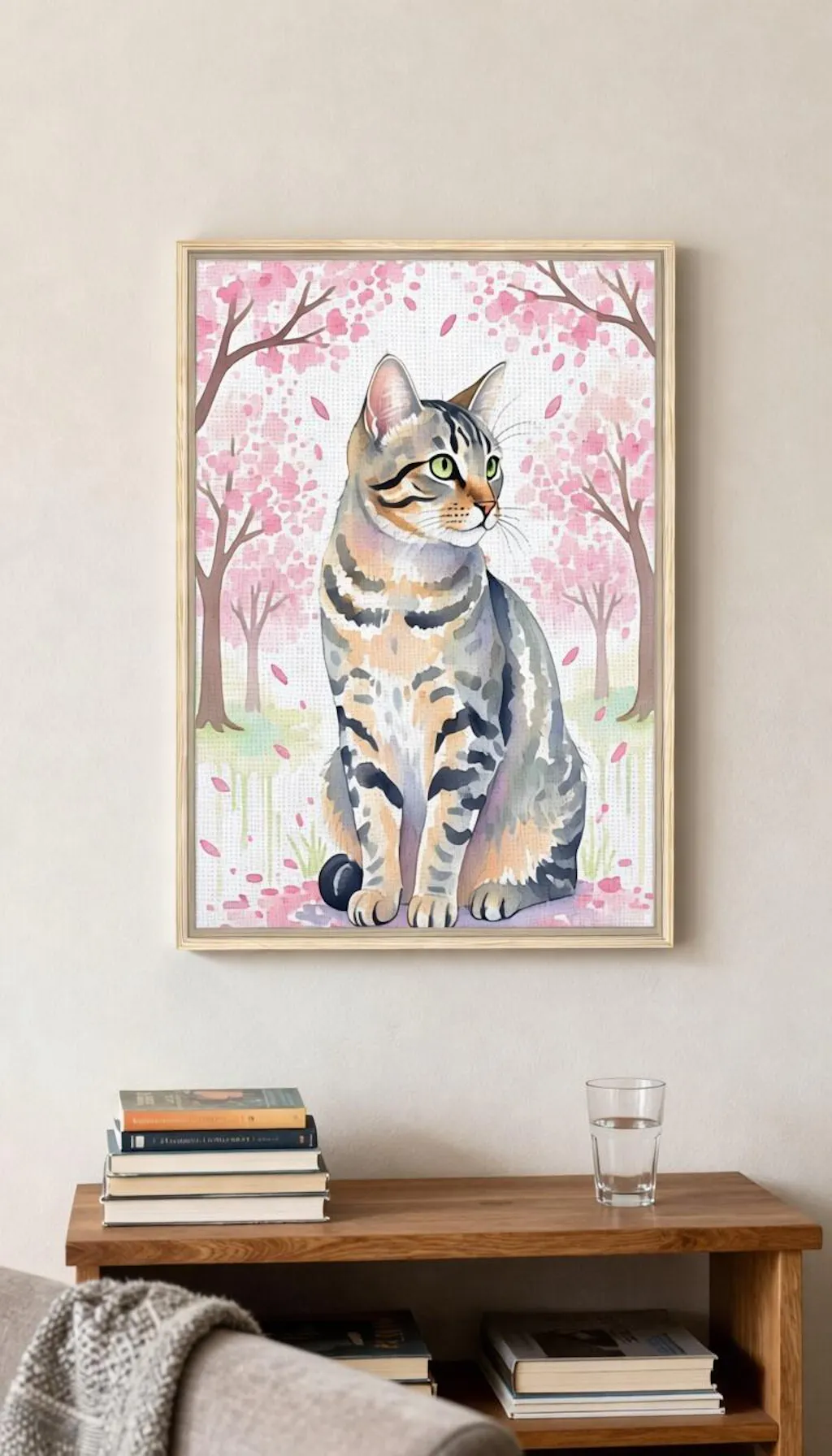
Impasto wants the matte canvas weave to read as continuous texture — gloss flattens the heavy brushwork and over-saturates the saturated palette. Framed Canvas in natural or warm wood keeps the post-impressionist mood; the wood grain echoes the painterly texture. Unframed Canvas leans gallery-modern for a contemporary interior. Wooden Framed Poster in warm wood is the lighter-weight alternative.