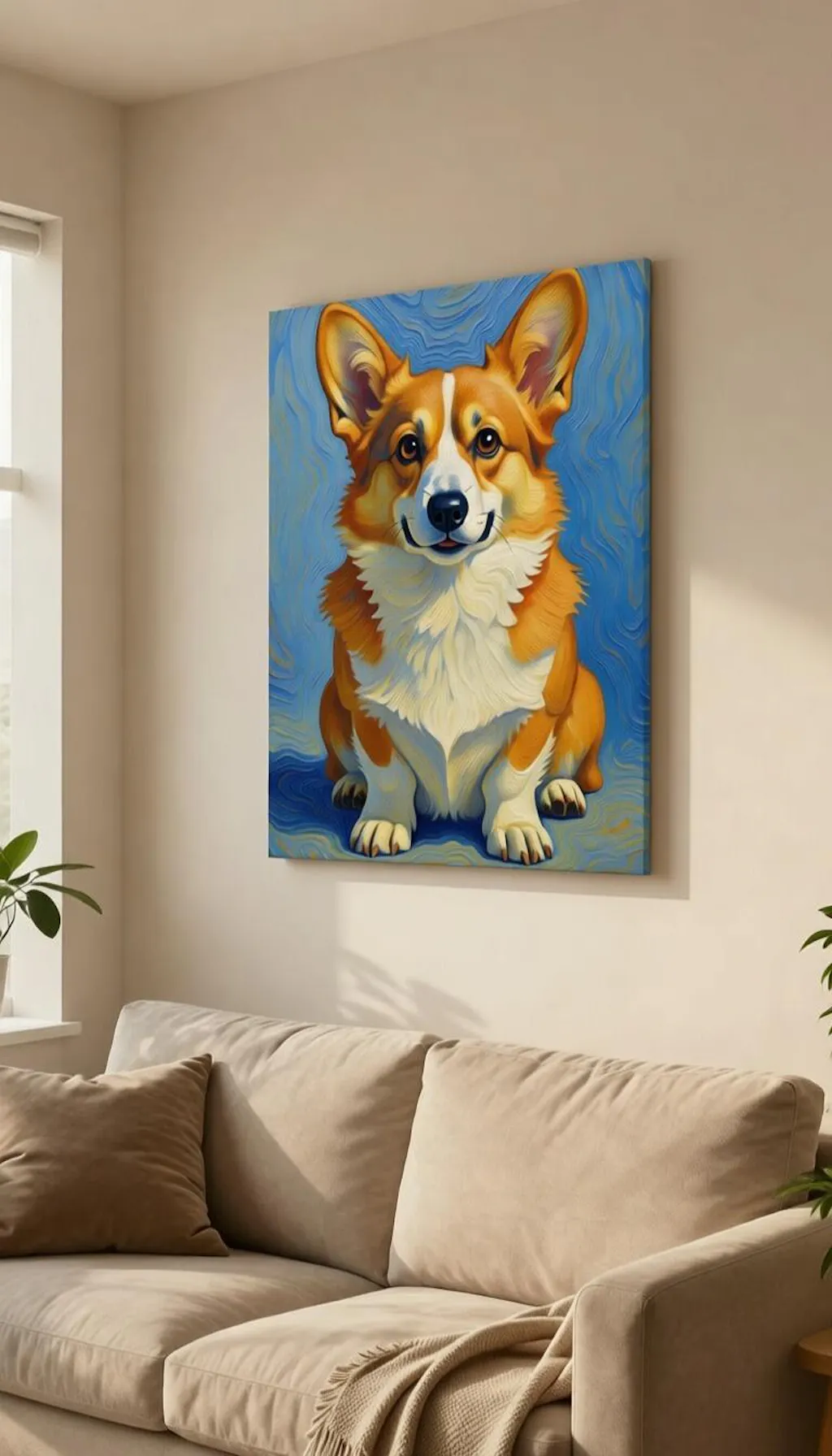
Husky as The Impressionist

For Husky owners

Van Gogh would have loved a Husky

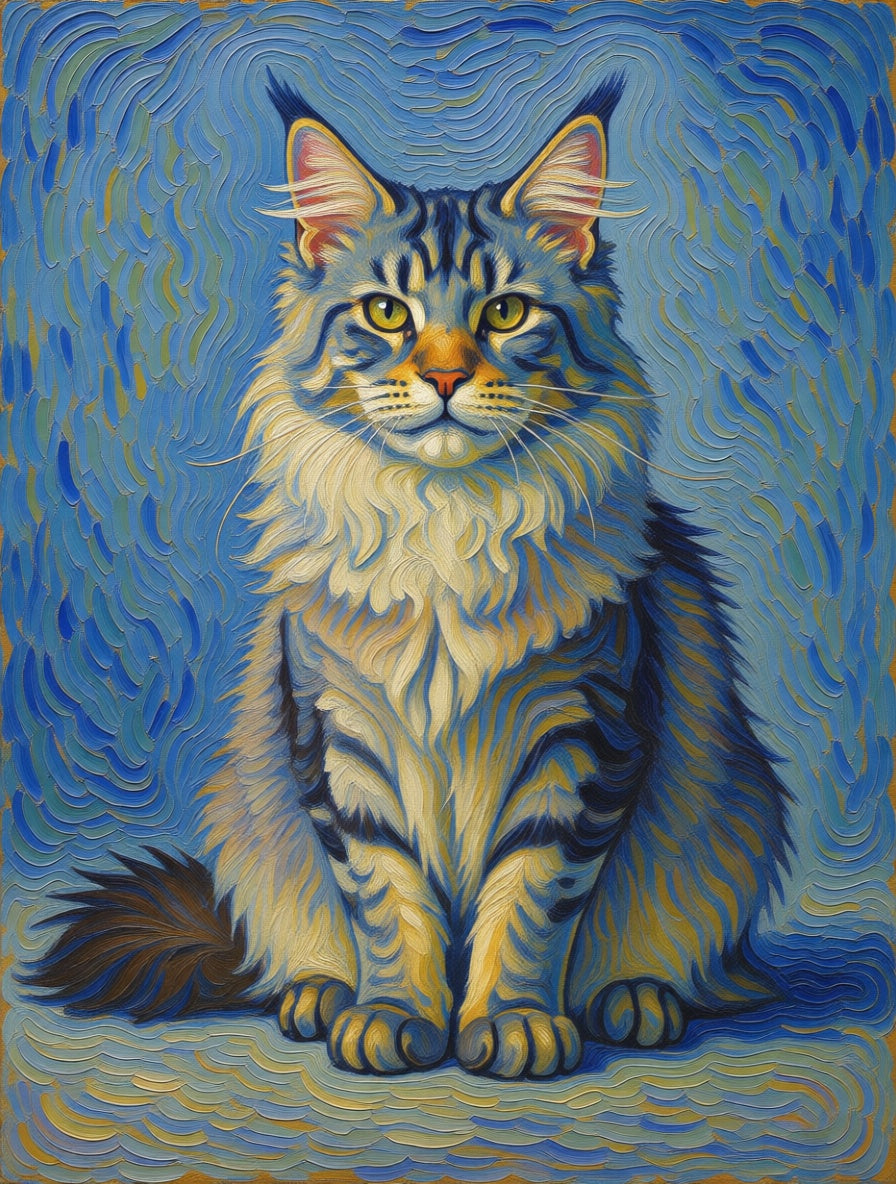
A Husky's double coat is texture made flesh — guard hairs, undercoat, mask markings, plume tail. Heavy impasto brushwork was invented for surfaces like this. The breed and the medium were made for each other.

Upload your photo →

Free instant preview · From $19.99

  • Art
  • Van Gogh
  • Expressive

The Husky × The Impressionist portrait

Coat and brushwork, same vocabulary

Van Gogh and the post-impressionists treated paint as texture — ridges, swirls, gestural marks left visible on the surface. A Husky's coat is already that: layered, banded, directionally combed. The painting uses the same brushstroke direction as natural coat growth, so the impasto reads as fur rather than paint dropped on a dog. The mask gets tighter strokes; the body dissolves into the medium.

Best as Framed Canvas in oak

Heavy impasto needs canvas to breathe — gloss flattens the brushstroke ridges that make this style work. Matte woven texture lets every brushstroke read three-dimensional. A light oak or honey frame echoes the warmth of the medium without overwhelming a swirling palette; a walnut frame turns the same portrait moodier and gallery-serious. Either format pairs with sunlit and softly-lit rooms.

Common questions

About this portrait

How does the impasto treatment handle a Husky's facial mask?
The body fur shares the loose, swirling brushwork of the background — paint as gesture — but the face shifts to tighter, more deliberate strokes so the mask, eye liner, eyebrow dots, and any blaze stay fully readable. A full black mask, a goggles pattern, a piebald split: each is preserved as your specific Husky's face rather than dissolving into texture. The face is the painting's most controlled surface.
Does this style flatter a black-and-white coat as much as a red one?
Yes, differently. A red or copper Husky melts into the warm impasto palette and reads as a unified, painterly subject — the whole canvas feels Van Gogh-warm. A black-and-white Husky cuts a stronger graphic contrast against swirling color and reads more like a graphic-poster version of the same painting. We keys the background palette to your dog's coat so either coat anchors the composition cleanly.
Will the brushwork around the eyes obscure ice-blue or bi-color color?
No — the eyes are painted with the calmest, most controlled brushwork on the whole canvas, deliberately. Ice-blue stays ice-blue, amber stays amber, and bi-color or parti eyes are kept literal as the painting's still center against an otherwise restless surface. On a Husky this tends to read as the most striking detail in the impressionist treatment — the one place the brush slows down.

See your Husky in other styles

  • The Abstract

    From $19.99

    Preview →
  • The Admiral

    Preview →
  • The Art Nouveau

    Preview →
  • In the Autumn Forest

    Preview →